Why Transit Station Doors Wear Out Fast
Stations combine almost every hard condition a door closer can face: constant public use, little supervision, weather at street level, and in underground systems, the piston effect. Every train pushes a column of air ahead of it and pulls air behind it, so doors to platforms, cross passages and service rooms feel repeated pressure pulses. A light closer will be overpowered or worn out quickly.
- Street-level entrances: wind, rain and snow; see exterior door closers.
- Service, communications and electrical rooms: must stay closed and locked; often rated.
- Staff and crew rooms: high cycle counts, access control.
- Emergency exit stairs and passages: must close and latch but open freely.
- Maintenance facilities and bus garages: heavy doors, exhaust and dirt.
Piston Effect and Air Pressure
Set backcheck to stop doors from being slammed open by pressure, and set latch speed so they reseat after each pulse. Size up where pressure is strong, then verify that opening force stays reasonable for passengers and staff. Test with trains running, not during a night shutdown.
Egress and Fire Safety in Stations
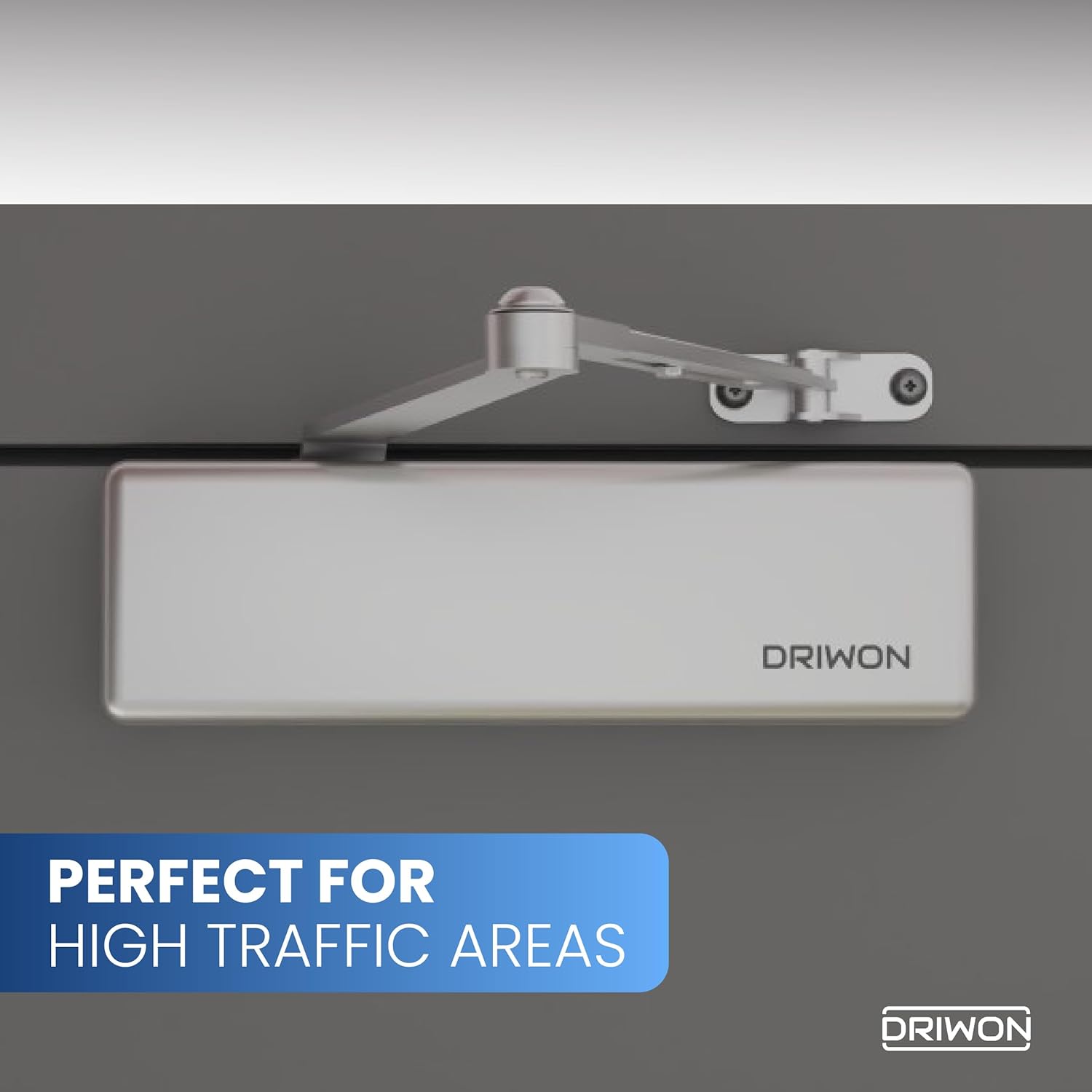
Fixed guideway transit and passenger rail stations are typically designed to NFPA 130, alongside the local building and fire codes, with specific egress and fire separation requirements. Doors in rated separations must be self-closing and latching under NFPA 80, and egress doors must open freely. The DN-9500 is UL listed and 3-hour fire rated when installed on a rated door assembly.
Vandalism tip: mount closers on the secure side of the door where possible, use parallel arm mounting to keep the arm flat against the door, and standardize on one cast iron model so crews carry a single spare. See
cast iron door closers.
Under the 2010 ADA Standards for Accessible Design (section 404), interior hinged doors must open with no more than 5 lbf, and a closer must be adjusted so the door takes at least 5 seconds to swing from 90° to 12° from the latch. Fire doors are the exception on opening force: the authority having jurisdiction sets the minimum. Always check local code and your AHJ.
Specifying Closers for a Transit Authority
- Group doors by environment: street, mezzanine, platform, tunnel-adjacent, service.
- Record door weights and fire labels.
- Test settings with trains running.
- Standardize on one model and stock spares in each maintenance zone.
See also our airport door closer page, underground parking and the guide to door closers for transportation hubs.
DRIWON DN-9500 Specifications
| Model | DRIWON DN-9500 extra heavy duty commercial door closer |
|---|
| Certification | ANSI/BHMA A156.4 Grade 1; UL listed |
|---|
| Fire rating | 3-hour fire rated when installed on a rated door assembly |
|---|
| Power size | Adjustable 1–6 |
|---|
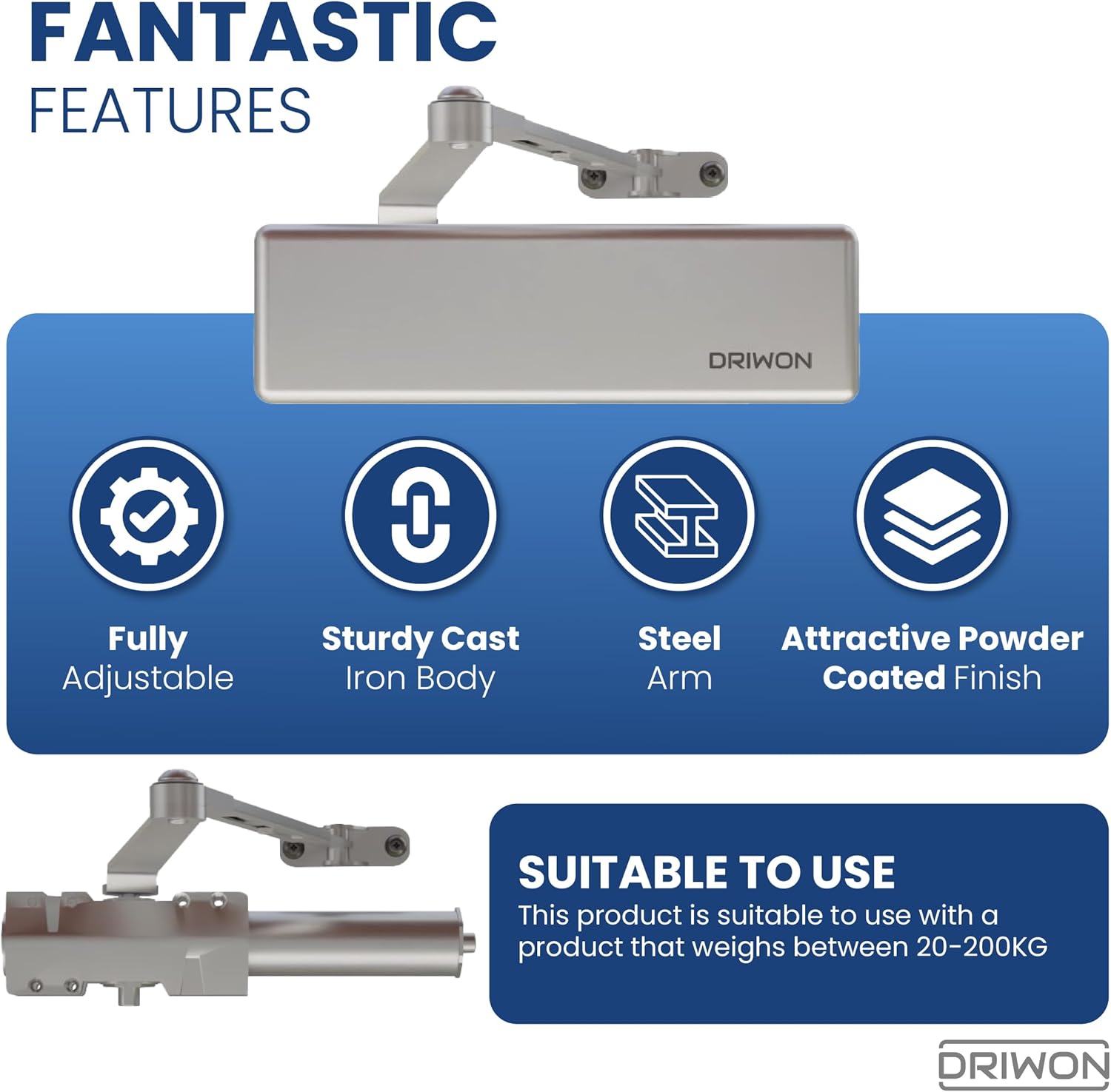
| Door weight | 44–440 lbs (20–200 kg) |
|---|
| Door width | 23"–59" (58–150 cm) |
|---|
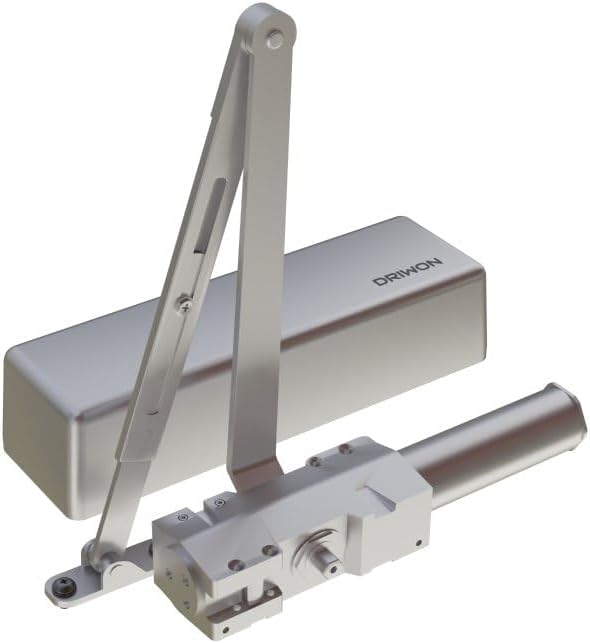
| Body / arm | Extra heavy duty cast iron body, wrought steel arm, heat-treated piston |
|---|
| Control | Hydraulic, with delayed action and secure positive latch |
|---|
| Finish | Corrosion-resistant powder coat, silver or black |
|---|
Need the lighter-duty option for interior doors? See the DRIWON DN-8220 Grade 1 door closer. Full details on the DN-9500 product page.