What Door Closer Is Recommended for High-Traffic Healthcare Corridors and Patient Room Doors?
For hospital corridor doors and patient room doors, specify an ANSI/BHMA A156.4 Grade 1 hydraulic surface closer with adjustable power, separate control of closing speed and latch speed, and a delayed-action option. Grade 1 hardware is the right class for doors that cycle all day and night, and an adjustable size 1–6 closer lets facilities teams tune each door to its weight, width and air-pressure conditions.
- Corridor and cross-corridor doors: constant staff, bed and cart traffic; need durable arms and reliable latching.
- Patient room doors: quiet closing matters at night; tune latch speed so the door seats without slamming.
- Soiled utility, clean supply, med rooms: doors that must close and latch every time.
- Stairwells and smoke barrier doors: closers are part of the listed fire door assembly.
- Back-of-house, imaging, labs and loading areas: heavier doors and heavier abuse.
Door Hardware for Healthcare Facilities: ADA Compliance & Infection Control
Under the 2010 ADA Standards for Accessible Design (section 404), interior hinged doors must open with no more than 5 lbf, and a closer must be adjusted so the door takes at least 5 seconds to swing from 90° to 12° from the latch. Fire doors are the exception on opening force: the authority having jurisdiction sets the minimum. Always check local code and your AHJ.
Closers also support infection control workflows. A reliably self-closing, latching door helps maintain separation between clean and soiled zones and supports the pressure relationships designed for isolation, procedure and sterile areas. A closer does not replace pressure monitoring, but a door that stands ajar defeats the HVAC design. The DN-9500's non-porous powder-coated finish can be wiped down; verify compatibility with your facility's disinfectants.
Tip: After install, test each door with the building HVAC running. Pressure differentials can require a higher closing force than the same door would need in a static building.
Fire-Rated Hardware for Hospitals
Hospitals rely on compartmentation: smoke barriers, horizontal exits, stairwell enclosures and corridor walls. Doors in these assemblies must be self-closing and positively latching under NFPA 80 and NFPA 101, and the hardware must be listed for use on the door. The DN-9500 is UL listed and 3-hour fire rated when installed on a rated wood or metal door assembly. Confirm the door label, the frame, and the AHJ requirements for every opening.
Checklist: specifying hospital door hardware
- Door size, weight, handing and material (wood, hollow metal).
- Fire rating label and any smoke-control requirement.
- Lock or latch function and strike: the closer must have enough power to fully latch.
- ADA opening force and sweep time, set after installation.
- Pressure differentials across the door.
- Finish, cleanability and quantity for the whole project.
This pairs with a hospital door lock specification: choose locks and latches first, then size the closer to reliably seat that latch.
Visible vs. Hidden Door Closers: What Are the Differences?
Health institutes and design teams often ask about hidden door closers. The right choice depends on the door, the code and the maintenance plan.
| | Visible (surface-mounted) | Hidden (concealed) |
|---|
| Location | On the door face or frame, in plain view | Inside the door leaf, the frame head or the floor |
| Look | Visible body and arm | Clean, minimal appearance |
| Installation | Simple; no cutting of the door or frame | Needs door or frame preparation, usually done at fabrication |
| Service | Easy to see, adjust and replace | Harder to access; adjustment may be limited |
| Door weight and size | Wide range, including very heavy doors | Often limited by the product and the door |
| Fire rated doors | Widely listed for rated assemblies | Only if listed for the specific door and frame |
| Cost | Lower | Higher |
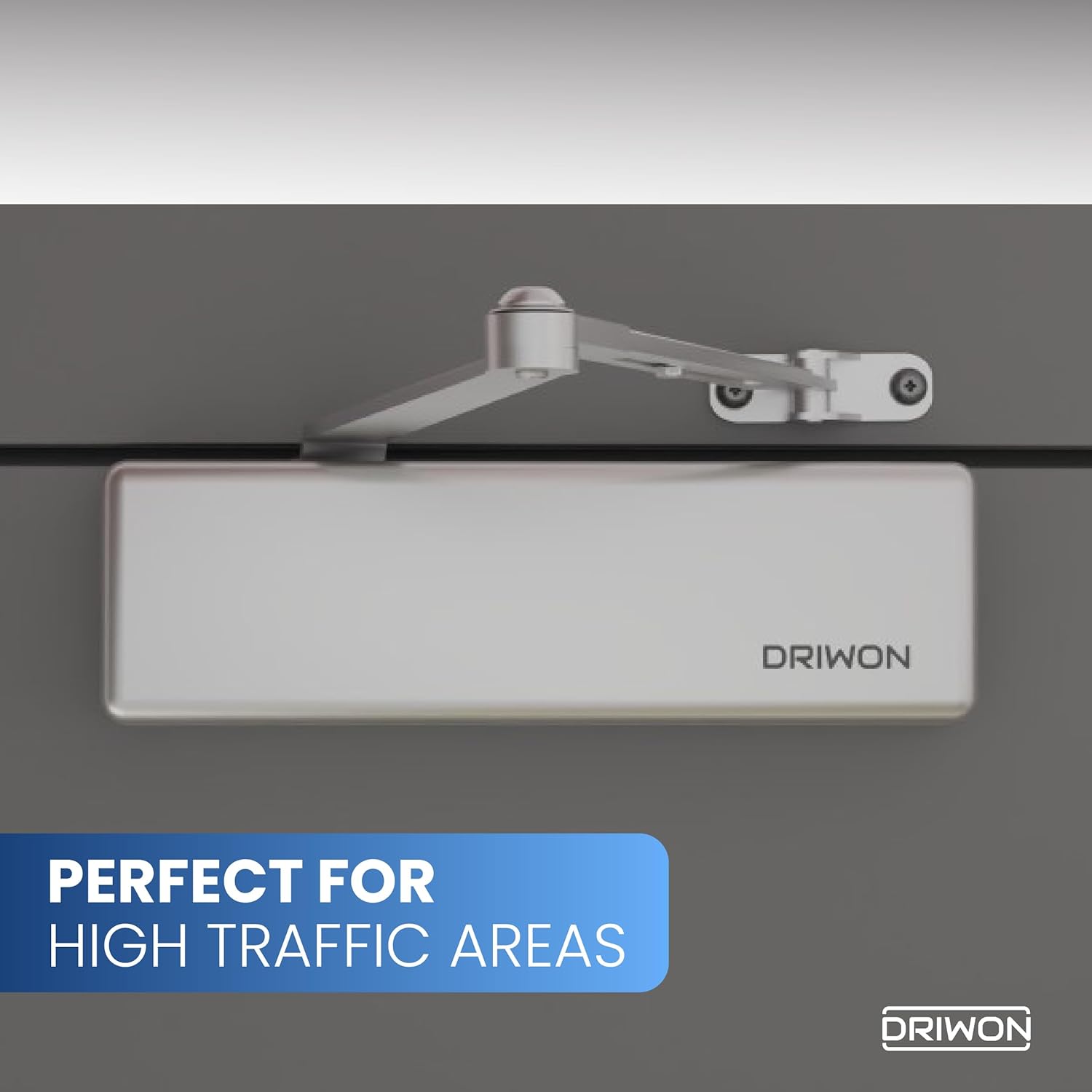
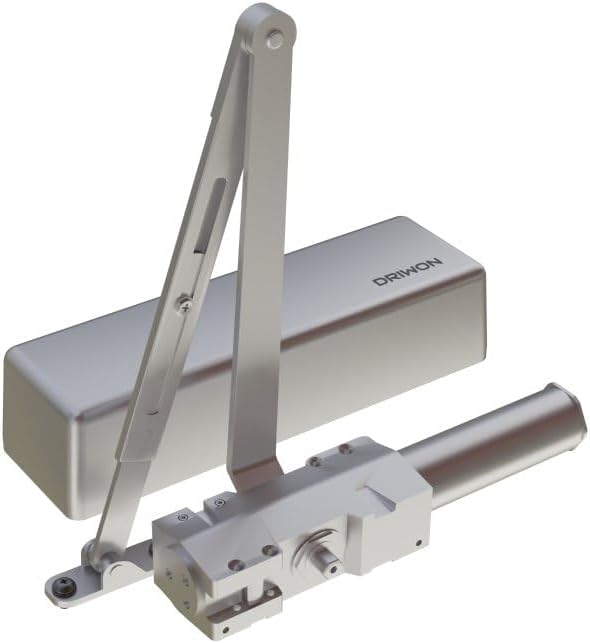
For hospital corridors, stairwells, back-of-house and medical building doors, visible closers are the practical default because they are strong, inexpensive and quick to maintain. The DN-9500 is a visible surface-mounted closer. If your project calls for concealed hardware, specify a product listed for the door and frame, and contact us for help with the visible options.
Hospital Revolving Doors, Automatic Doors and Healthcare Door Opening Solutions
Hospital revolving doors use their own drive and braking system, not a door closer. Because revolving doors are not accepted as the only means of egress or accessible entry, they are normally paired with an adjacent swinging or automatic door. That swinging door, and the many manual doors inside the building, are where a closer belongs.
For healthcare door opening solutions, many hospitals combine low-energy automatic operators at patient entrances and key corridors with Grade 1 closers on manual, fire-rated and back-of-house doors. Where an operator is installed on a fire door, the door must still close and latch as designed, so check the listing for the full assembly.
Behavioral Health Door Closers and Anti-Ligature Hardware
In behavioral health units, hardware must reduce places where a cord or fabric could be attached. Anti-ligature closers and hardware are designed for that purpose, often with concealed or tightly integrated bodies and sloped surfaces. The DN-9500 is a standard surface closer and is not an anti-ligature product. Use it on staff corridors, nurse stations, pharmacy, storage and support doors, and use anti-ligature rated hardware in patient-accessible behavioral health areas.
Specialized Healthcare Applications
Healthcare campuses include more than the hospital itself. Outpatient clinics and medical office buildings have their own occupancy rules and door population, senior living communities prioritize low opening force and delayed action, and hospital garages add pressurized and exposed doors.
DRIWON DN-9500 Specifications
| Model | DRIWON DN-9500 extra heavy duty commercial door closer |
|---|
| Certification | ANSI/BHMA A156.4 Grade 1; UL listed |
|---|
| Fire rating | 3-hour fire rated when installed on a rated door assembly |
|---|
| Power size | Adjustable 1–6 |
|---|
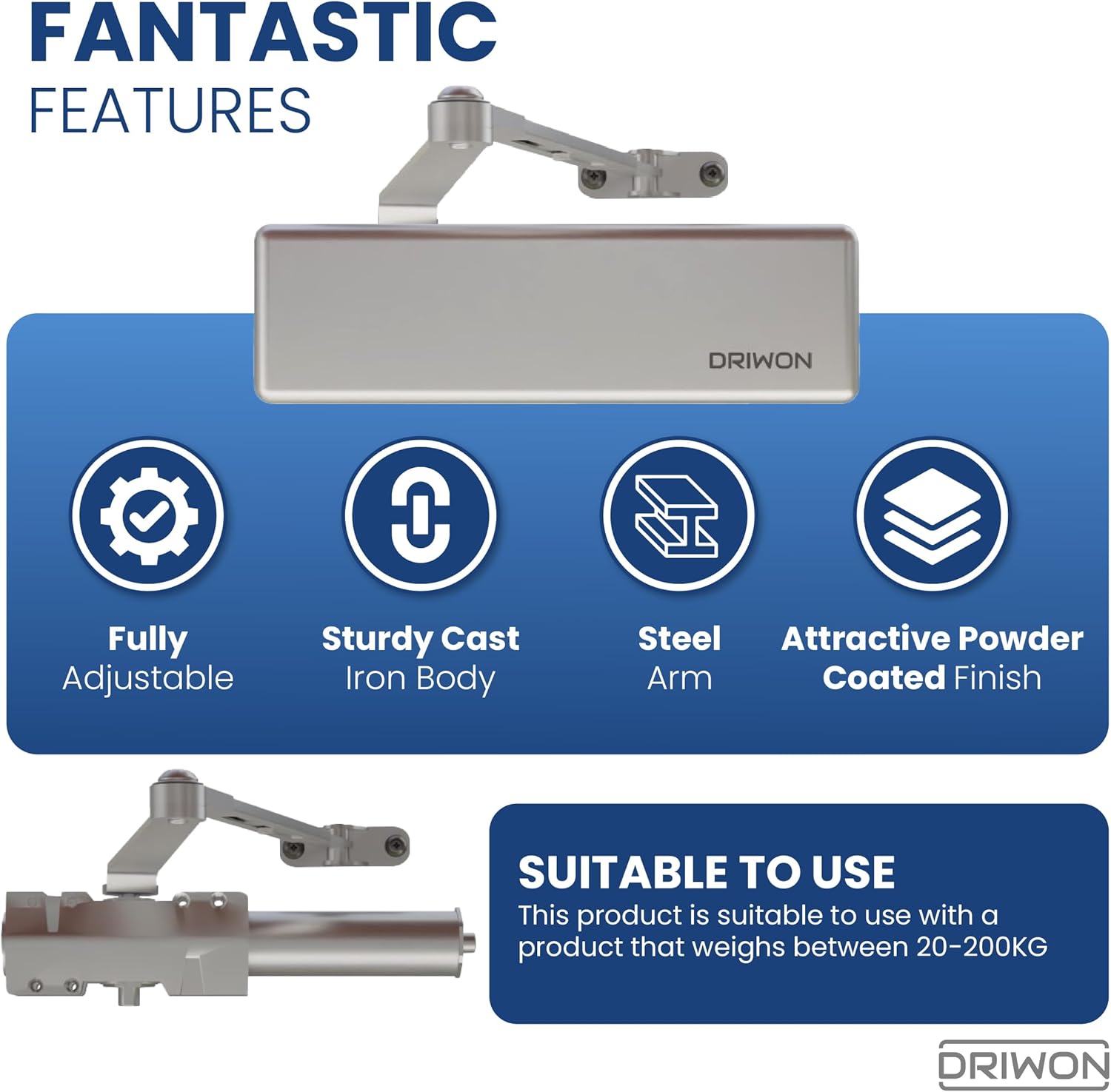
| Door weight | 44–440 lbs (20–200 kg) |
|---|
| Door width | 23"–59" (58–150 cm) |
|---|
| Body / arm | Extra heavy duty cast iron body, wrought steel arm, heat-treated piston |
|---|
| Control | Hydraulic, with delayed action and secure positive latch |
|---|
| Finish | Corrosion-resistant powder coat, silver or black |
|---|
Need the lighter-duty option for interior doors? See the DRIWON DN-8220 Grade 1 door closer. Full details on the DN-9500 product page.