Why Parking Garage Doors Need Extra Heavy Duty Closers
Parking structures are one of the harshest places for a door closer. Many are open to the outside air, so doors face wind loads, freezing temperatures, summer heat, humidity and de-icing salt. Stair doors are slammed by wind and kicked open by people carrying bags, and maintenance teams may only visit occasionally. A Grade 1 cast iron closer with backcheck, a high power setting and a protective finish is the right specification.
- Stair tower doors: where stairs are enclosed, doors are part of a rated assembly and must self-close and latch.
- Elevator lobby doors: heavy pedestrian use and drafts from the elevator shaft and ramps.
- Pedestrian exits to the street: exposed to weather and vandalism.
- Electrical, storage and pay-station rooms: service doors that must stay closed and locked.
- Skybridge connections: doors linking the garage to a hospital, airport, office or mall.
Wind, Cold and Corrosion
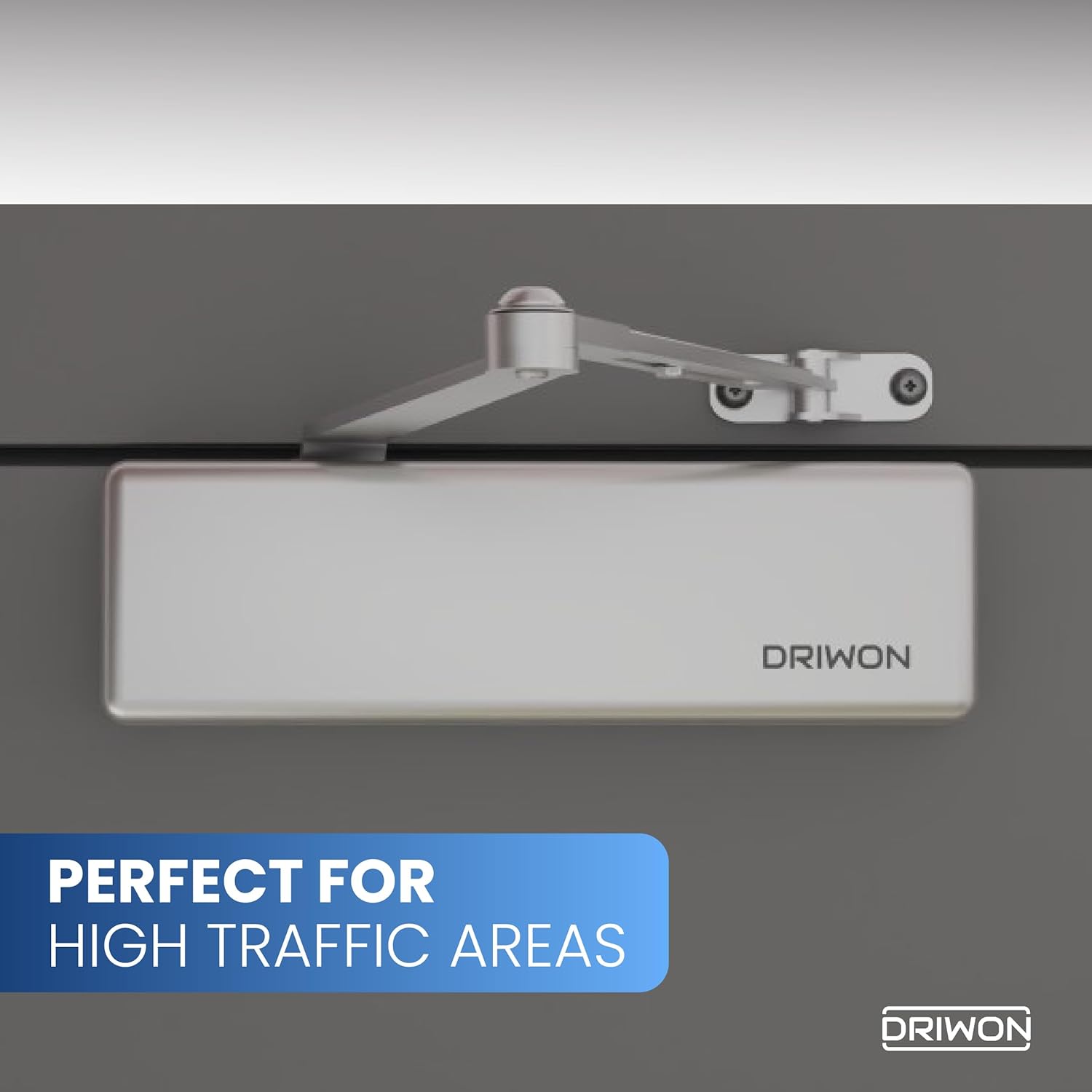
Size up for exposed doors: a door that latches easily on a calm day may stand open in a gust. Set backcheck to stop the door from being thrown into the wall and bending the arm. In cold climates, hydraulic fluid thickens and doors close more slowly, so check closing speed before winter and again before summer. The DN-9500 is built with a corrosion-resistant powder coat for demanding environments; inspect exposed closers at least twice a year.
Tip: Parallel arm mounting on the stair side keeps the arm out of the wind and away from people carrying luggage or shopping bags. Our
mounting types guide explains when to use each arm position.
Open Parking Structures vs. Underground Garages
This page focuses on open parking structures, where doors face wind, freezing temperatures and road salt. Underground and enclosed garages raise different issues: mechanical ventilation that pushes or pulls on doors, condensation, and fire-rated separations between the garage and the building above. We cover them on a dedicated page.
Fire Codes and Accessibility
Where garage stairs or rooms are enclosed and rated, doors must be self-closing and latching under NFPA 80 and the IBC, using hardware listed for the assembly. The DN-9500 is UL listed and 3-hour fire rated when installed on a rated door assembly.
Under the 2010 ADA Standards for Accessible Design (section 404), interior hinged doors must open with no more than 5 lbf, and a closer must be adjusted so the door takes at least 5 seconds to swing from 90° to 12° from the latch. Fire doors are the exception on opening force: the authority having jurisdiction sets the minimum. Always check local code and your AHJ.
Garages that serve hospitals, airports and campuses often share hardware standards with the main building. See our pages on airport door closers and hospital door closers, and use the door closer size chart to set the power for each door.
DRIWON DN-9500 Specifications
| Model | DRIWON DN-9500 extra heavy duty commercial door closer |
|---|
| Certification | ANSI/BHMA A156.4 Grade 1; UL listed |
|---|
| Fire rating | 3-hour fire rated when installed on a rated door assembly |
|---|
| Power size | Adjustable 1–6 |
|---|
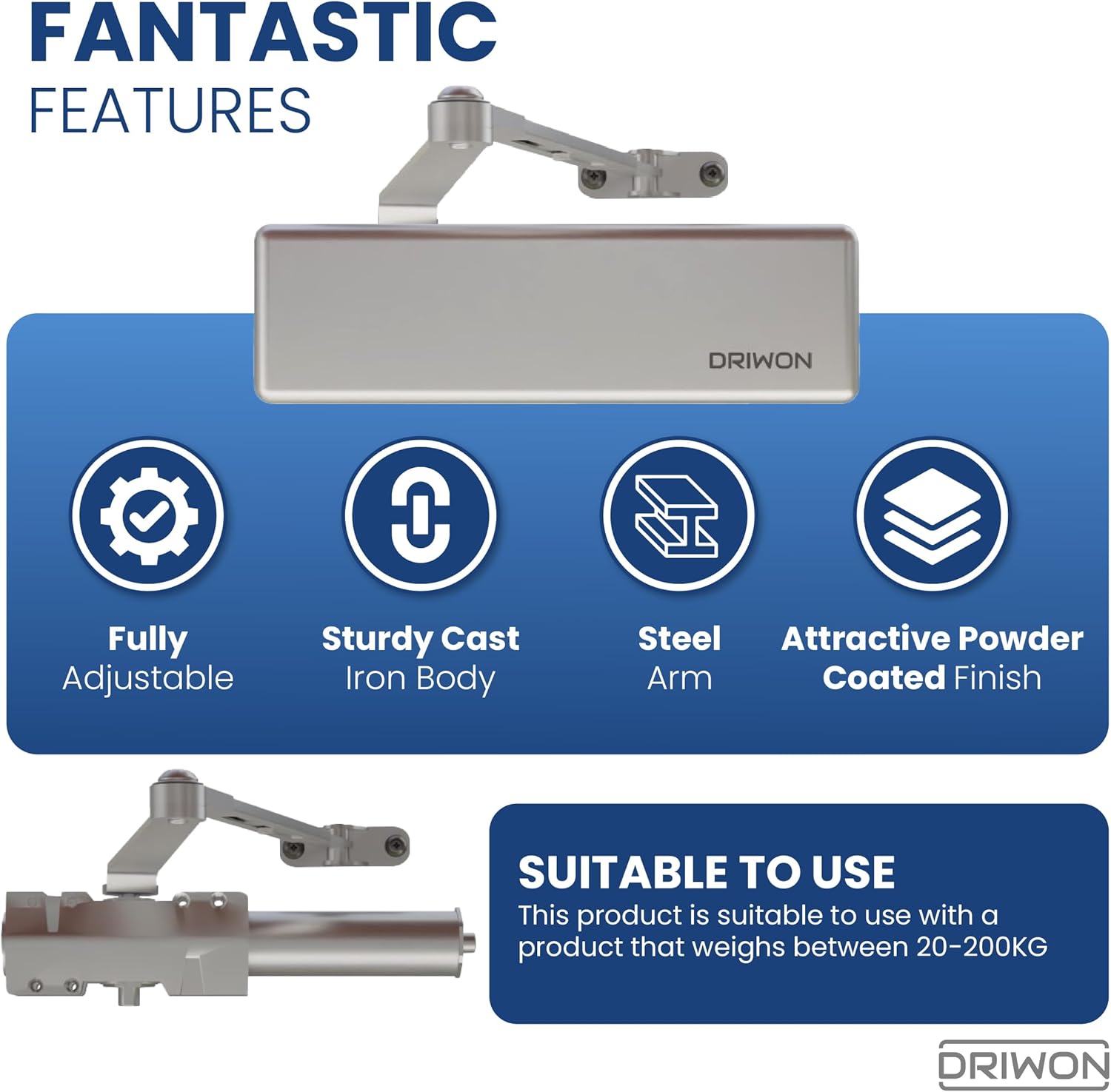
| Door weight | 44–440 lbs (20–200 kg) |
|---|
| Door width | 23"–59" (58–150 cm) |
|---|
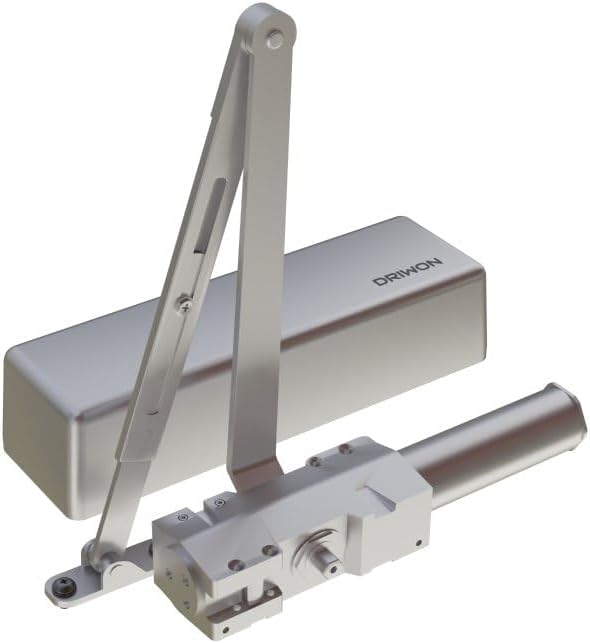
| Body / arm | Extra heavy duty cast iron body, wrought steel arm, heat-treated piston |
|---|
| Control | Hydraulic, with delayed action and secure positive latch |
|---|
| Finish | Corrosion-resistant powder coat, silver or black |
|---|
Need the lighter-duty option for interior doors? See the DRIWON DN-8220 Grade 1 door closer. Full details on the DN-9500 product page.