What Door Closer Is Best for Nursing Homes and Assisted Living?
Senior care buildings combine two goals that pull in opposite directions: doors must be easy to open for frail residents, yet fire, smoke and stair doors must close and latch on their own. The answer is an ANSI/BHMA Grade 1 hydraulic closer with adjustable power, separate closing and latch speed valves and a delayed-action function. That combination lets facilities teams set a low opening force on accessible doors while keeping enough power to latch rated doors.
- Resident room and corridor doors: quiet, controlled closing; a light opening force where the door is not fire rated.
- Smoke barrier and cross-corridor doors: must self-close and latch; often held open on magnetic holders tied to the fire alarm.
- Exit stair doors: part of a rated enclosure, so the closer is part of the listed assembly.
- Dining rooms, activity rooms and chapels: heavy use at meal and event times; delayed action helps groups and residents with mobility aids.
- Soiled linen, trash and storage rooms: hazardous areas where doors must close and latch.
Codes for Senior Living Door Hardware: NFPA 101, CMS and ADA
Nursing homes that participate in Medicare and Medicaid must meet the NFPA 101 Life Safety Code as adopted by CMS, and are surveyed by state agencies or accrediting bodies. Assisted living facilities follow state licensing rules and the locally adopted building and fire codes. In healthcare occupancies, doors to exit stairs, smoke barriers, vertical openings and hazardous areas must be self-closing and positively latching, and corridor doors to resident rooms must latch to resist the passage of smoke. Your AHJ and the facility's life safety plan determine which doors need closers.
Under the 2010 ADA Standards for Accessible Design (section 404), interior hinged doors must open with no more than 5 lbf, and a closer must be adjusted so the door takes at least 5 seconds to swing from 90° to 12° from the latch. Fire doors are the exception on opening force: the authority having jurisdiction sets the minimum. Always check local code and your AHJ.
Tip: For residents with limited strength, aim for the lowest opening force that still lets the door close and latch, then use delayed action (typically 5–15 seconds) on primary corridors so the door does not start moving while a resident is still in the opening.
Memory Care Doors and Secure Egress
Memory care units often use delayed-egress locks, access control and door alarms to prevent unsupervised exits. Those systems only work if the door is fully closed, so the closer must reliably seat the door against the latch or electric strike every cycle. Coordinate the closer position with the door position switch, the strike and any magnetic lock so hardware does not clash, and confirm the whole assembly with the AHJ.
Specifying Door Closers for a Senior Living Project
- List door types: resident rooms, corridors, smoke barriers, stairs, dining and service doors.
- Record door weight and width, including wide bariatric and bed-access doors.
- Confirm which doors are fire or smoke rated and which have hold-open devices tied to the alarm.
- Set opening force and closing time after installation, then re-test seasonally.
- Standardize on one Grade 1 model to simplify spares and maintenance training.
For deeper code guidance, read our guide on door closers for senior living and assisted care and our ADA door closer requirements article. Hospitals and clinics are covered on our hospital door closer page.
DRIWON DN-9500 Specifications
| Model | DRIWON DN-9500 extra heavy duty commercial door closer |
|---|
| Certification | ANSI/BHMA A156.4 Grade 1; UL listed |
|---|
| Fire rating | 3-hour fire rated when installed on a rated door assembly |
|---|
| Power size | Adjustable 1–6 |
|---|
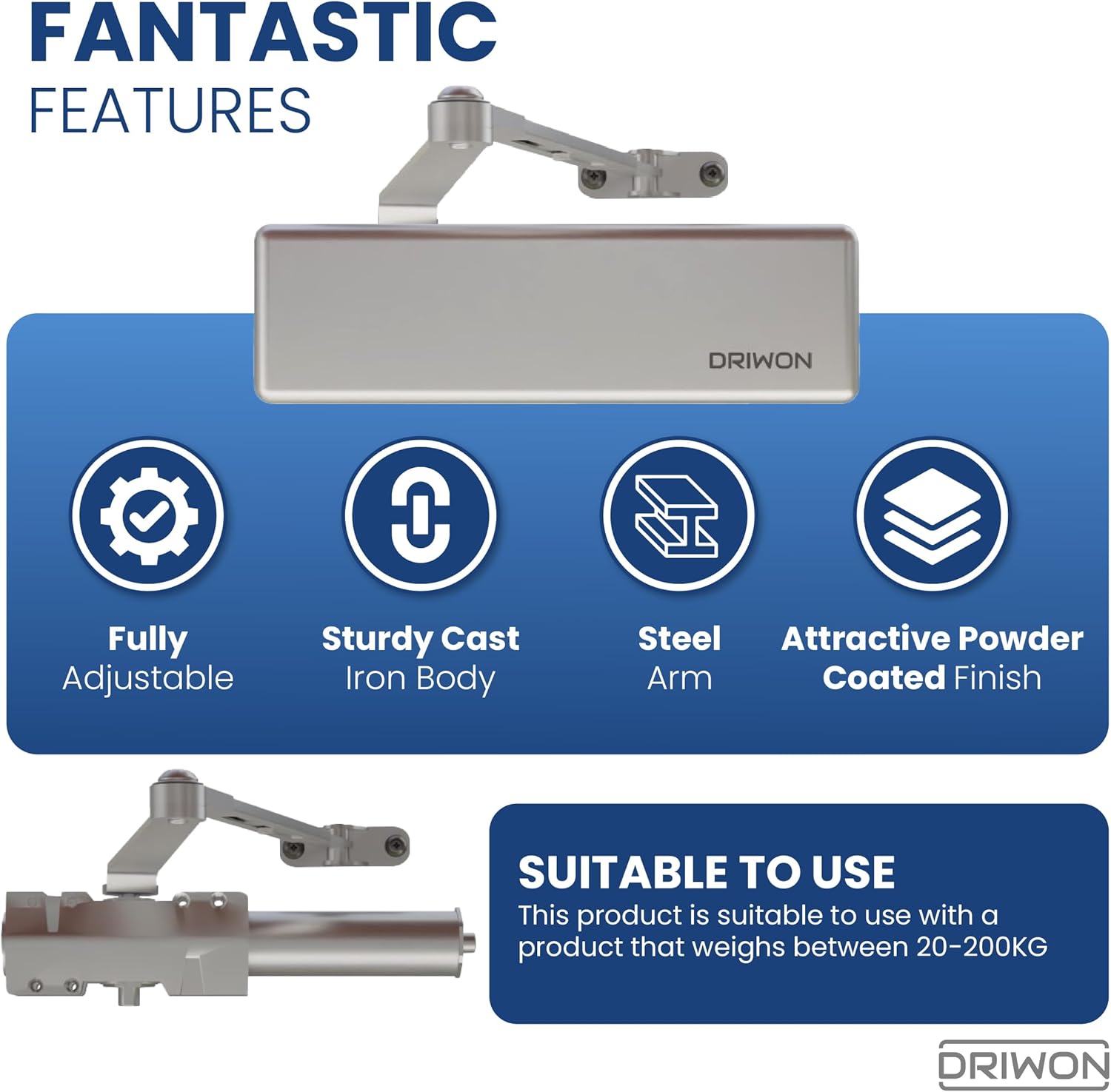
| Door weight | 44–440 lbs (20–200 kg) |
|---|
| Door width | 23"–59" (58–150 cm) |
|---|
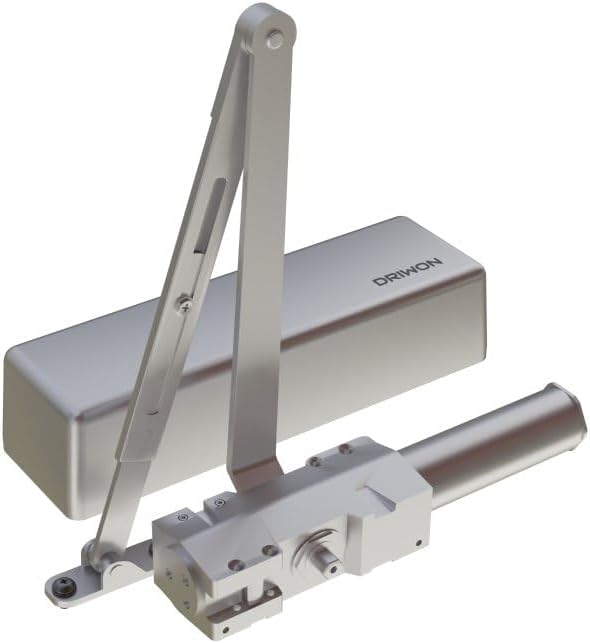
| Body / arm | Extra heavy duty cast iron body, wrought steel arm, heat-treated piston |
|---|
| Control | Hydraulic, with delayed action and secure positive latch |
|---|
| Finish | Corrosion-resistant powder coat, silver or black |
|---|
Need the lighter-duty option for interior doors? See the DRIWON DN-8220 Grade 1 door closer. Full details on the DN-9500 product page.